A conversation with ALEJANDRO CARTAGENA

On photography as a living image — how a frozen moment keeps finding new meaning
“I have been different people; I have been different artists throughout my career.”
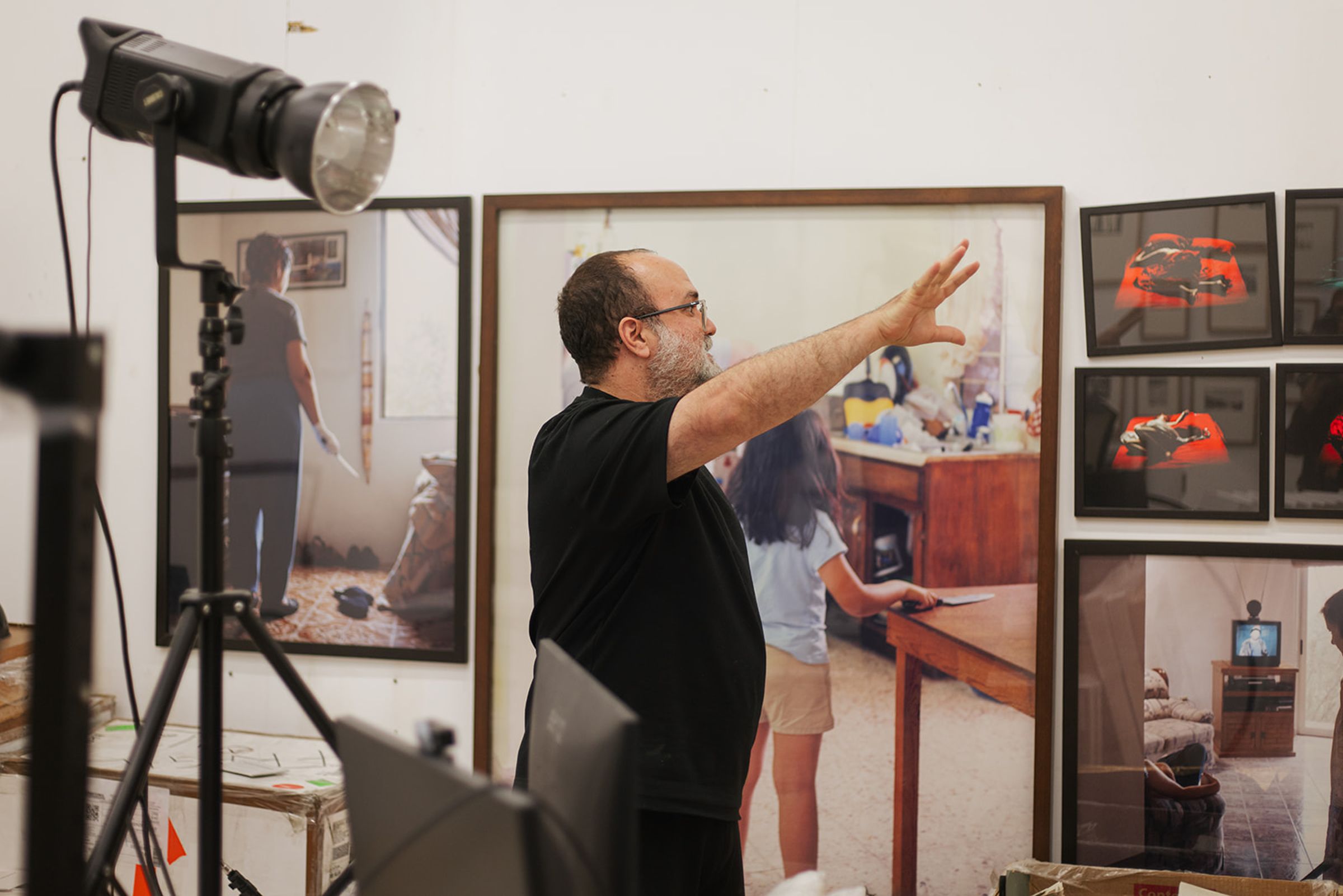
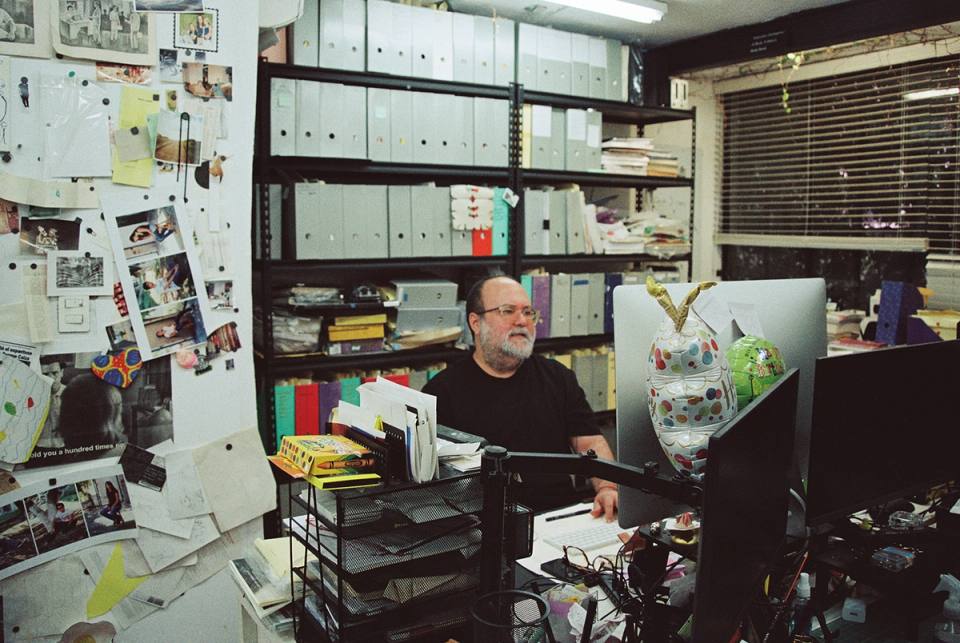
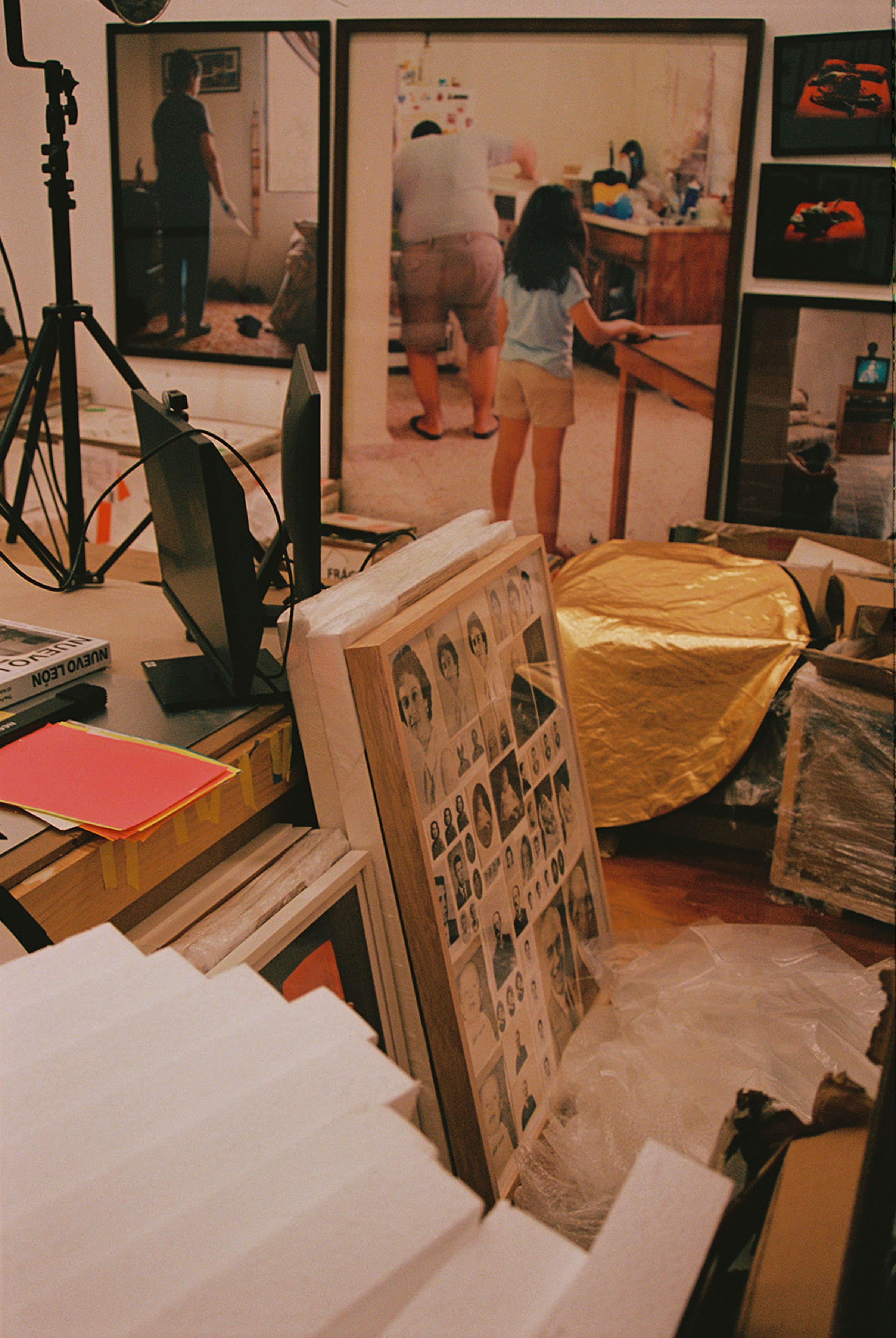
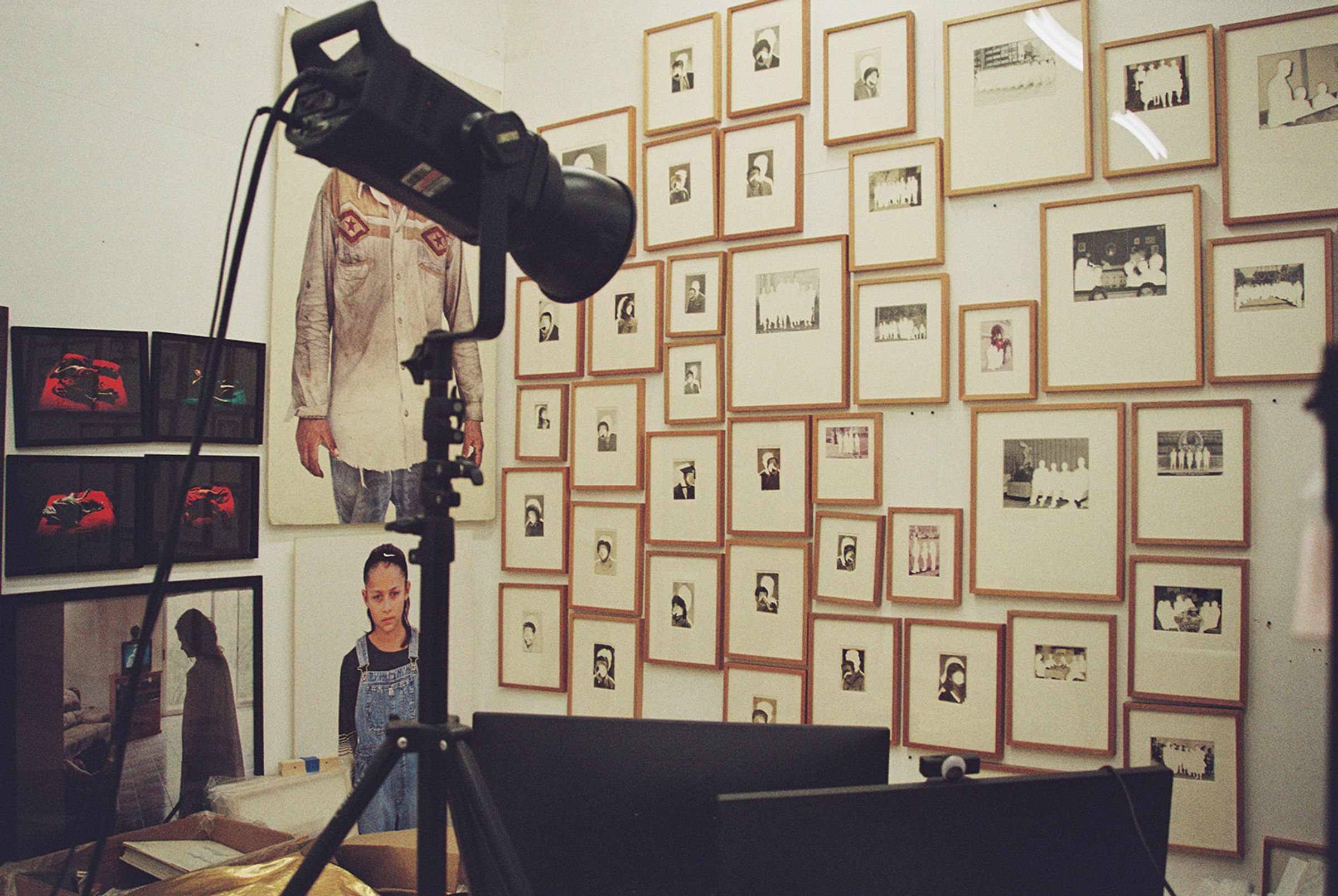
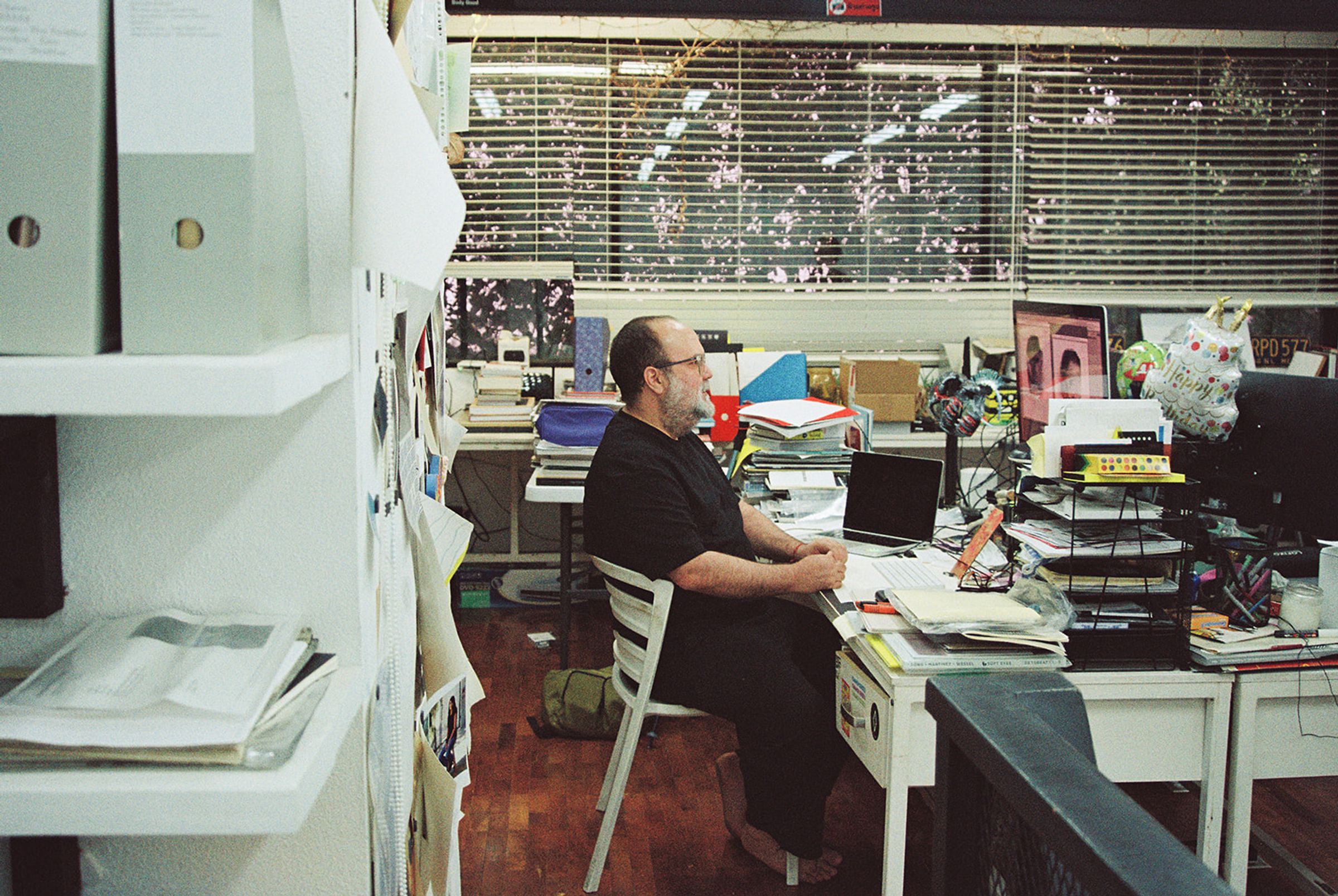
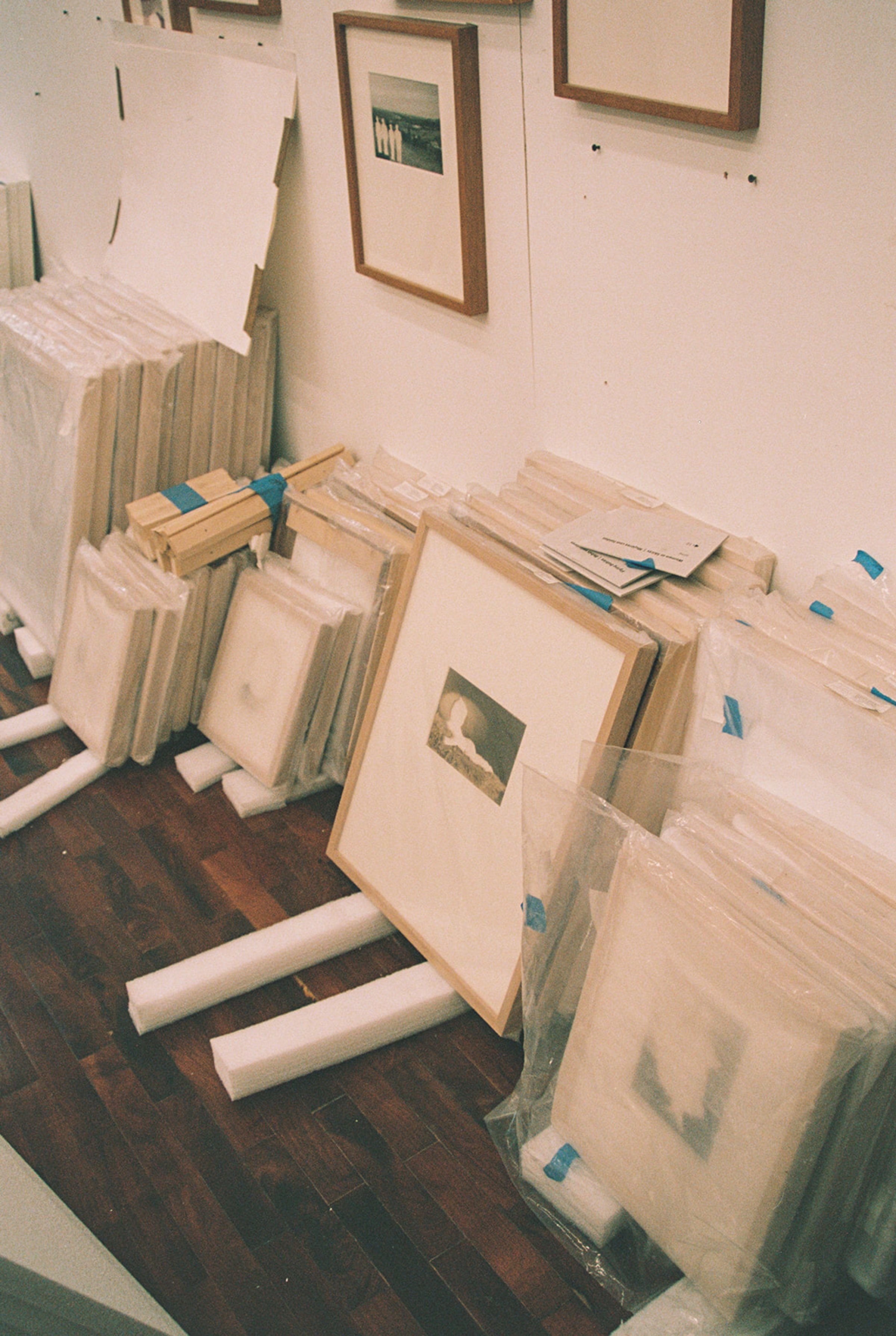
Within monasteries, the corridor serves as a mental and spiritual transition: moving from noisy working spaces, such as workshops and kitchens, into a sacred area. Alejandro Cartagena’s studio and home work in much the same way. Located in the centre of Monterrey, Mexico, he warmly received me at his studio door, barefoot and with a sense of ease, and walked me through a narrow corridor twenty to thirty feet long that led into his home. At the end, his whole career unfolded in front of us, photos, prints, and collages, presenting all visitors to his work on arrival.
Looking at Cartagena’s work that spans almost 30 years, one might assume he is Mexican. His photographs portray contemporary Mexican identity through an urban lens, one of growth, expansion, and dispossession. But that assumption would be wrong. Cartagena is Dominican. Dominican-Mexican? Mexican-Dominican? When I asked how he understood his own identity in relation to his work, he offered a response that resisted a single, fixed definition: “I have been different people; I have been different artists throughout my career.”
Which raises the question of which artist he is now. Is he documenting the world, trying to understand Mexican identity, or using photography for something else altogether.
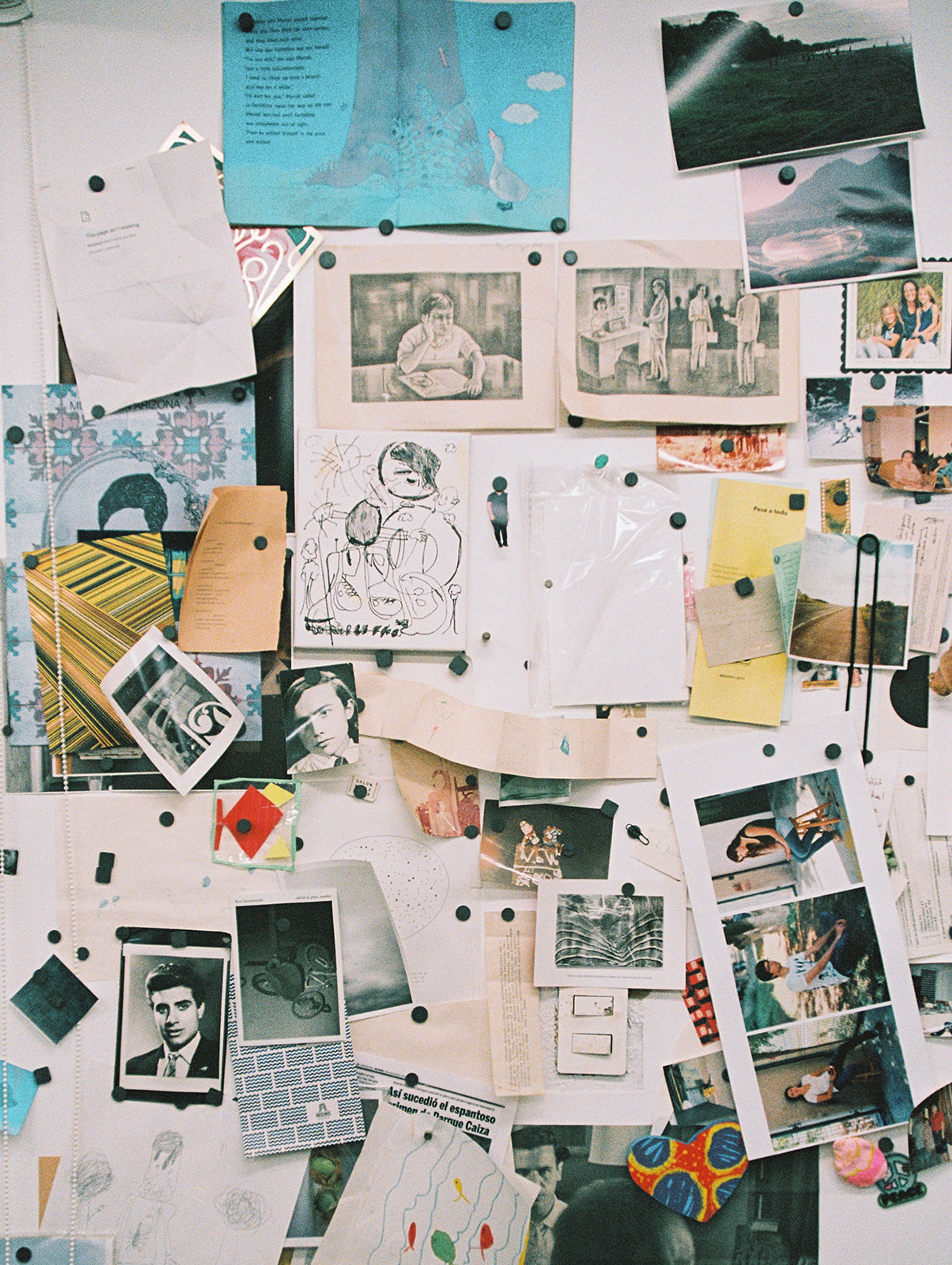
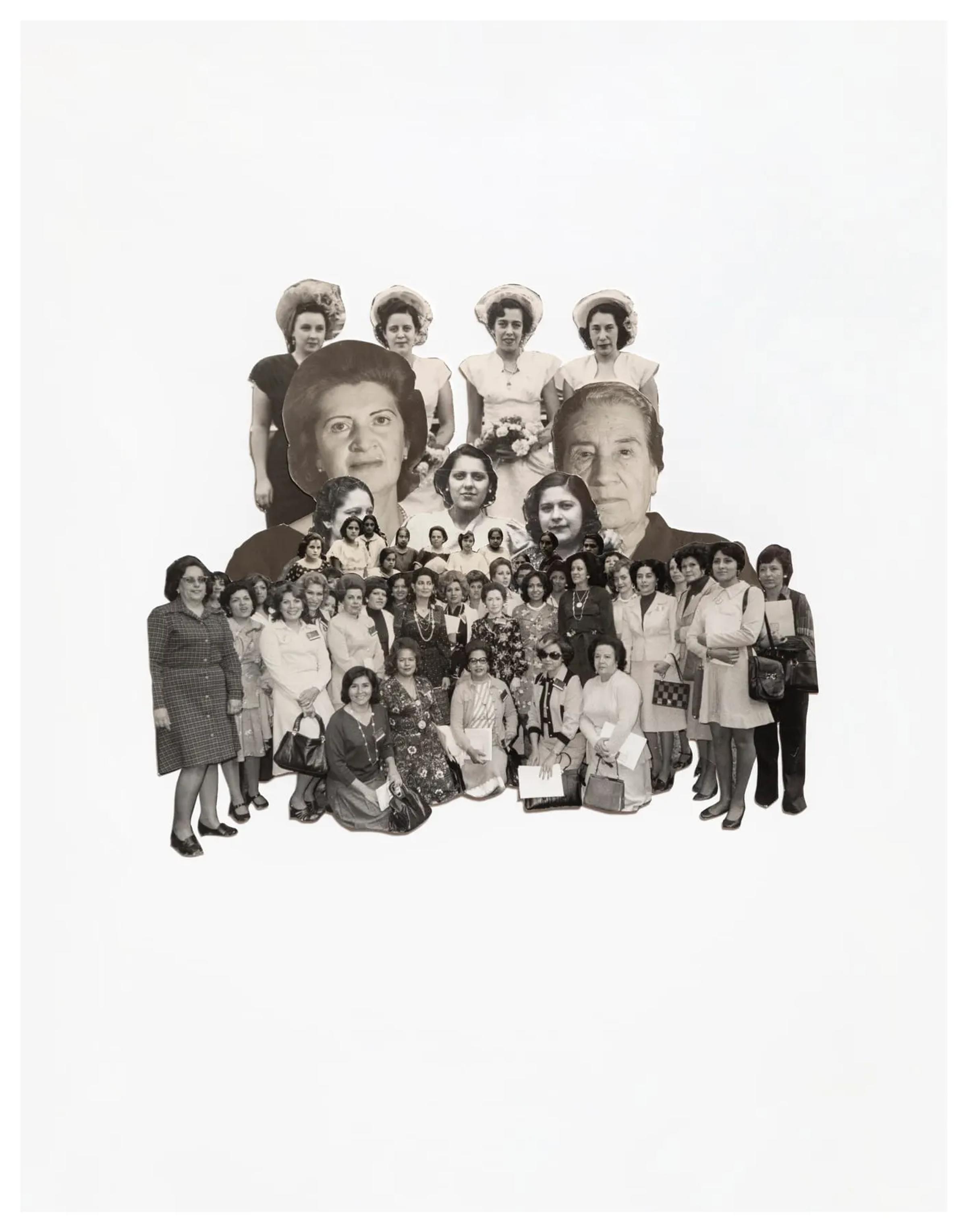
When Alejandro arrived in Mexico from the Dominican Republic in 1990, at age thirteen, he came across a family photo album at his grandmother’s house in Monterrey. Inside were photographs of relatives he had never met, including people who were no longer alive. Among them was a photograph of his mother’s sister, who had died when she was around seven or eight years old. Here was someone who belonged to his family, someone whose life had ended before Alejandro could know her, yet whose face had survived in a photograph.
That encounter stayed with him. He became fascinated by photography’s ability to stop time, to freeze a moment and make it available long after the moment itself had disappeared. As he put it, “What you see is what there is.” And yet, a photograph also leaves us with questions.
Who was this person before the shutter clicked? Where did they go afterward? What remains of a life when all we have left is an image?
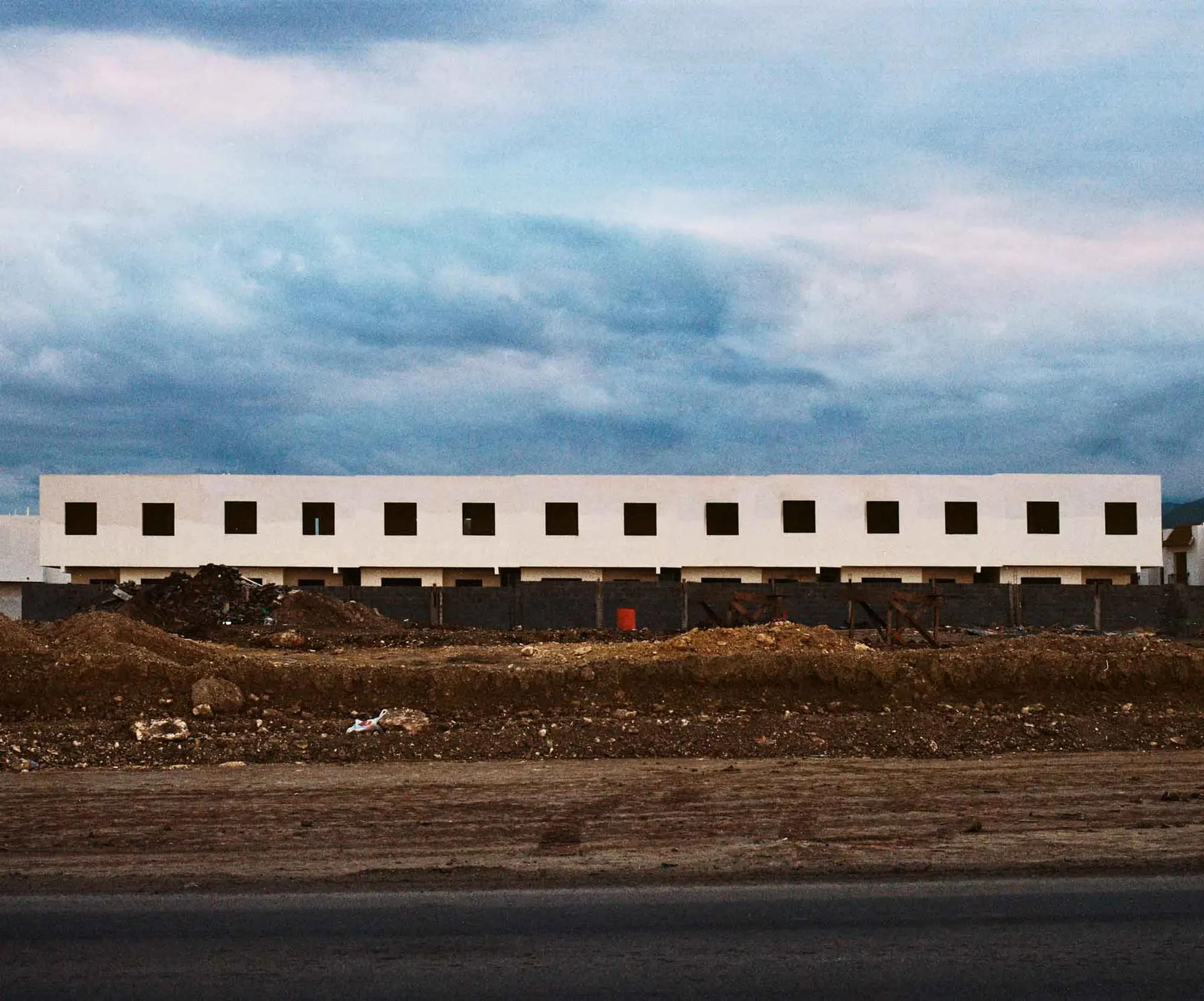
For Alejandro, the idea of a city has always been closely tied to the idea of construction. His maternal grandfather was a bricklayer from Juárez, Nuevo León, México, the same municipality where the family ran a restaurant. Rather than continuing the restaurant business by making tamales, his grandfather began building houses, eventually constructing one of the first cement houses in Juárez at the beginning of the twentieth century. Construction remained part of the family’s life: his uncle and cousin both became civil engineers and ran construction companies. Alejandro grew up fascinated by the city, watching it expand and understanding it as a place where people could build something for themselves.
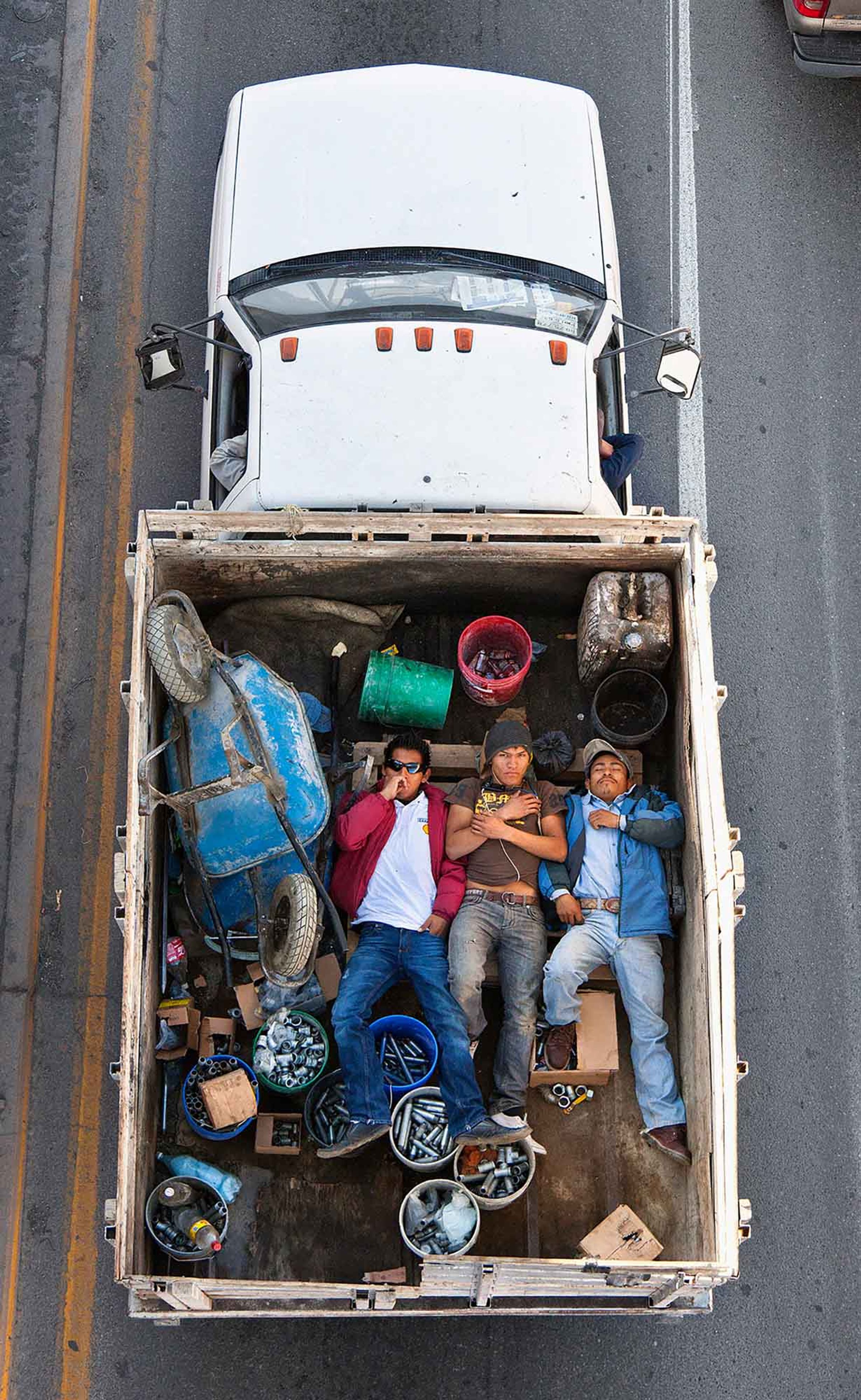
This family history adds another dimension to Carpoolers, a series of work he first started in 2011, that showcases a birds-eye view of workers riding in the beds of pickup trucks across Monterrey, capturing a part of the everyday movement of a city shaped by construction and growth.
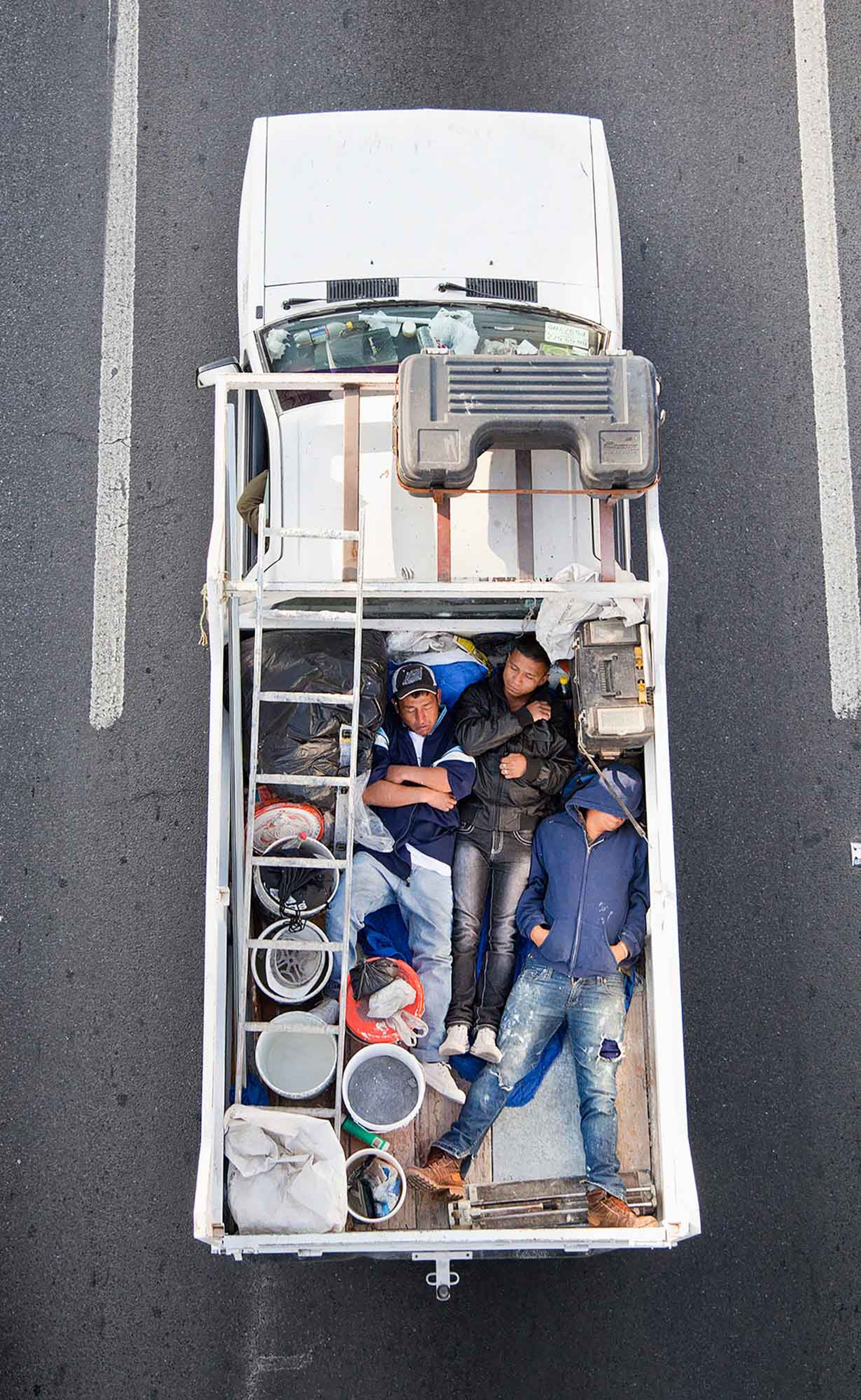
An image can change depending on where, how, and at what scale we encounter it. In Carpoolers, removed from a loud, high-speed freeway, and presented on a still, quiet, museum wall, these photographs enter a different environment. The sounds, heat, and movement surrounding the original scene are gone, leaving the viewer alone with the image. What gets lost in that transition, and what becomes visible instead?
The workers photographed in the beds of pickup trucks are caught in a passing moment, some still sleeping, some who have caught his open lens and smiled back, all suspended in the frame even as their lives continue beyond it. We can look at their faces and bodies, observe their proximity to one another, and imagine the world beyond the photograph, but the image cannot tell us everything. Like the family album that first captivated Alejandro, these photographs preserve a moment while reminding us how much of a life remains outside the frame.
Cartagena began his career interested in photography as a way to document the world around him, and its capacity to capture specific moments in time, creating a record of people, places, and situations. Until he came across a fundamental question, one that continues to shape his practice to this day: What do you do with the images you have made? How do you give them meaning?
Photography, for Alejandro, is about more than documenting what is in front of him. His work also involves the decisions made around an image: how each is selected, placed in context, and brought into conversation with other images and ideas. These choices shape how the viewer encounters and interprets the photograph. He began thinking about books, exhibitions, and formats.
A photograph printed at ten inches can invite a different kind of attention than the same image enlarged to ten feet. At one size, the viewer might lean in; at another, the image can occupy the room, changing the relationship between the photograph and the person looking at it. Scale becomes more than a technical decision. It adds another layer of meaning, even an invitation, ultimately changing how it is experienced.
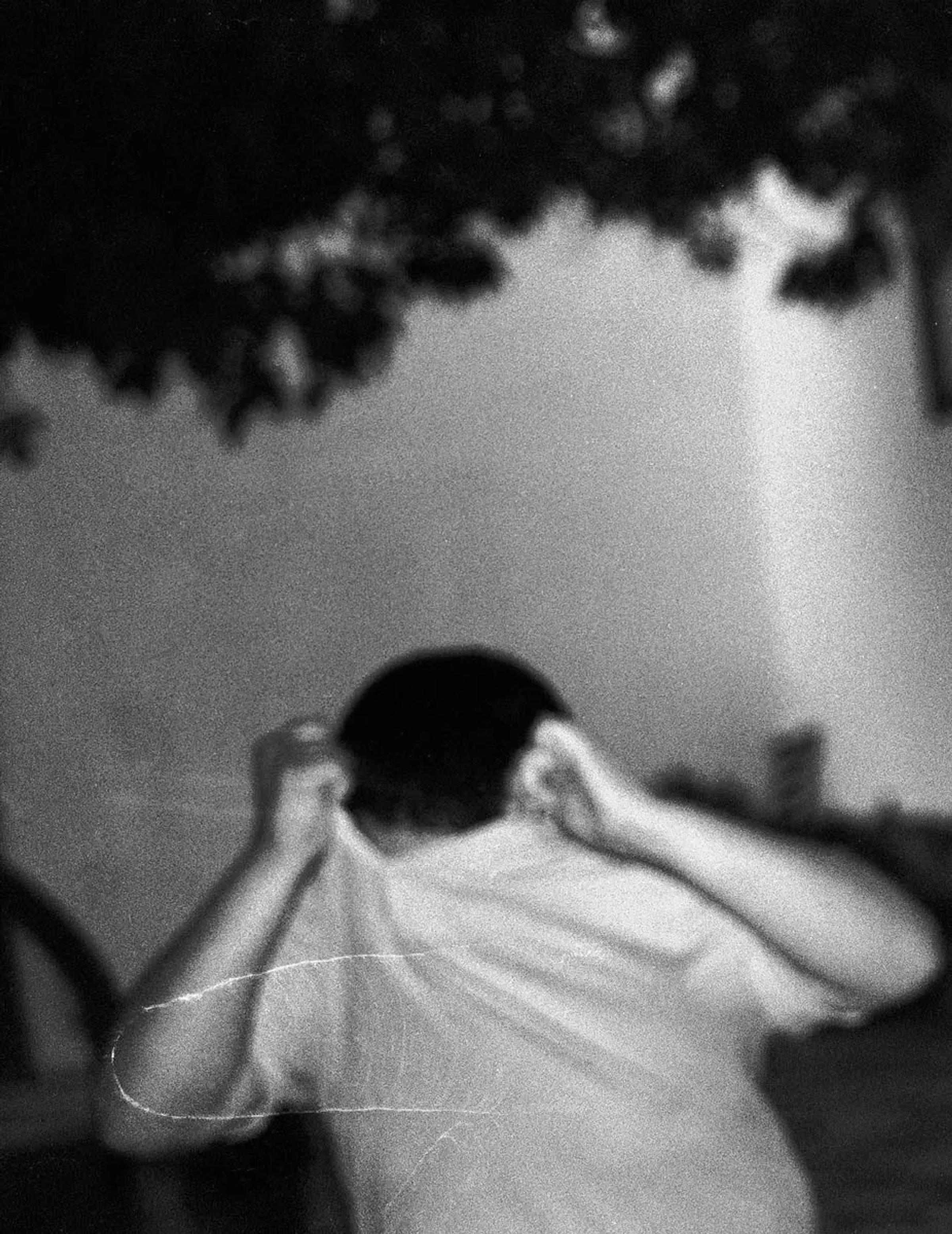
If an image can take on a different meaning depending on where and how it is presented, what happens when the artist working with it is not the person who took it? Following this question, Alejandro began experimenting with photographs made by others, collecting images and archives whose original contexts were not always preserved or readily available. Detached from the people, places, and circumstances that first gave them meaning, these photographs offered him material to work with, rearrange, and reinterpret.
This led him toward what can be understood as expanded photography: a practice in which the image becomes a starting point, open to new contexts, formats, relationships, and interpretations. Instead of trying to detach photography from reality, he has spent years exploring what else it can do with it.
“You really do not need much to know how to be a photographer; what you need is to have good ideas.”
At the age of 27, he felt a deep anxiety to get the ideas inside his head out into the world, so he picked up a camera. Partly because he wanted to get rid of that anxiety by generating his ideas as quickly as possible, and partly because, as Cartagena puts it, “you really do not need much to know how to be a photographer; what you need is to have good ideas.”
For him, every project has to begin somewhere within himself: a problem, an idea, an experience as a citizen, or even an experience as a consumer of images. his art is ultimately an obsession with ideas and things that gives him the inner fire to keep working. “To be an artist, nothing is a coincidence. Everything is pure decisions. You are making decisions all the time… And the only thing that gives you is that it has to do with you, with your life in some way.”
That personal relationship also raises a question of responsibility. If the work is personal, does Cartagena feel responsible for the way objects are portrayed? Or does that responsibility dissolve into the idea that the work belongs to him?
For Cartagena, the distinction is clear: his work is not documentary. “I am not representing reality. I am not telling a story about a specific person. I am interested in my point of view about what I see, and I think that is more honest than trying to be a reporter and say, ‘Here, this happened, and this.’ My work does not go there.”
Instead, he compares his practice to that of a novelist who draws from real life. His stories might include real characters and historical events, but the result is ultimately a subjective interpretation of the world. Photography, in this sense, does not have to claim neutrality to tell us something about reality. It can acknowledge the position from which it looks.
Anaïs Nin, for whom Mexico was a lasting source of inspiration, wrote, “We don't see things as they are, we see things as we are.” The idea offers another way to approach Cartagena’s work. If every image is shaped by the person behind the camera, then his photographs tell us something about the world he observes, but they may also reveal something about the person doing the looking. What does Alejandro’s point of view allow us to see, and what might it tell us about Alejandro himself?
In 2009, Alejandro began photographing people living in the suburbs of metropolitan Monterrey. It was a difficult moment. The drug war had created an atmosphere of distrust, and he knew that making these photographs would require a different approach. He already had a digital camera, but he understood that the equipment alone would not be enough. Before he could photograph anyone, he needed to earn their trust. He had to walk, spend time with people, and work slowly enough that he would not seem like someone simply arriving, taking a picture, and leaving. So he brought out a giant tripod and a large-format camera, the kind that requires the photographer to duck beneath a black cloth to compose an image. The process was cumbersome and deliberately slow. Instead of quickly raising a camera and pressing the shutter, he had to stay, adjust the equipment, and work in front of the people he was photographing.
“I gained the trust of the people I was photographing, because I was there with them. There was nothing to hide.”
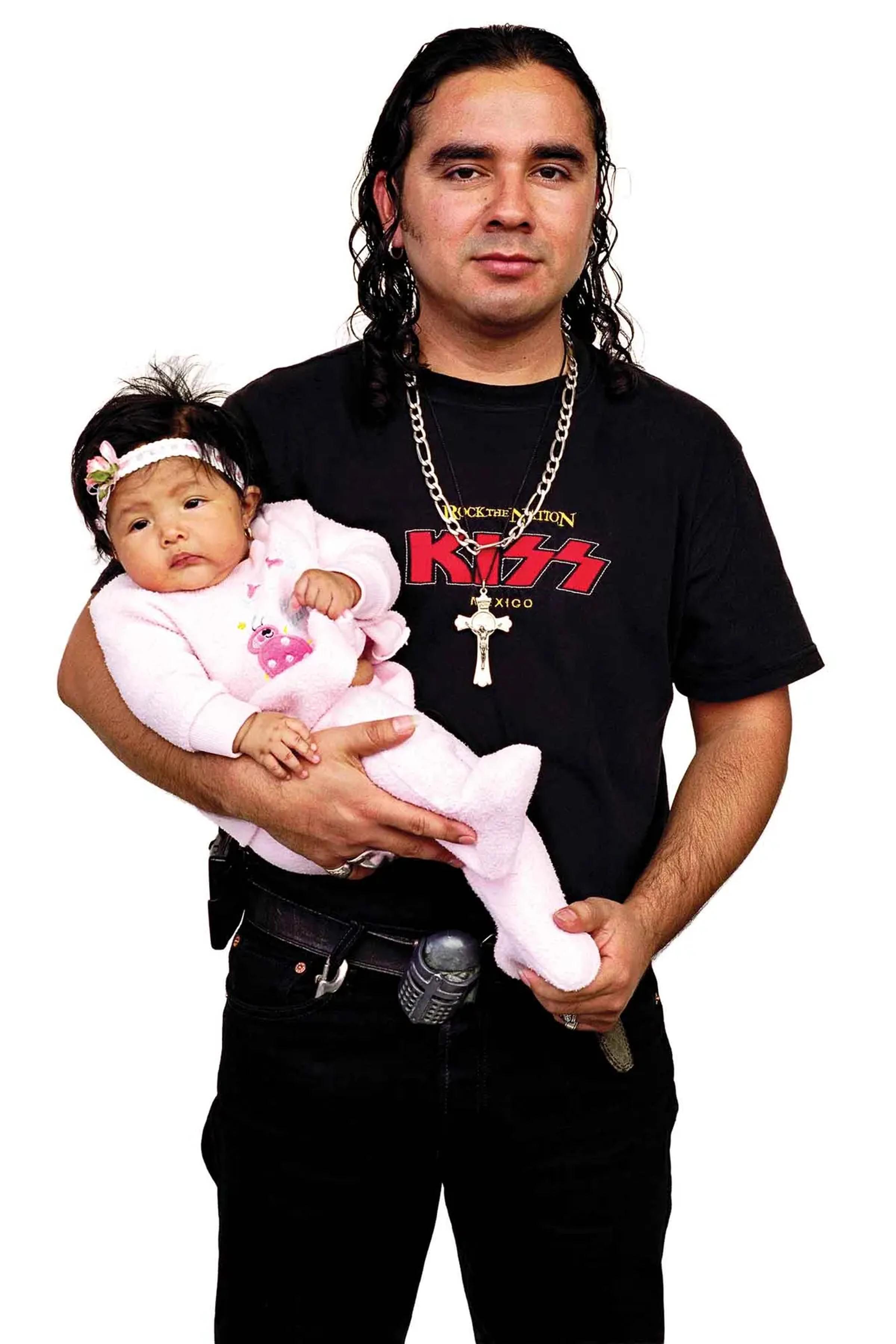
The slowness became part of the encounter. The camera did more than produce a photograph; the way Alejandro used it changed the relationship between himself and the people standing in front of it. It was a practical example of what he meant when he described the artist as someone with a giant toolbox: each project calls for a different tool, chosen not simply for the image it can produce, but for what it makes possible.
Today, Alejandro’s relationship with photography is increasingly shaped by what he has already made. “I am trying to catch up with the Alejandro who was super determined to do projects.” He is returning to work from previous years, revisiting projects he has made but never finished or published. For now, the task is to bring that work into the world, to catch up with his own past before moving toward making new images again.
“As for taking photographs, right now my main work is with the archive, the archive of my work and someone else's archive that I work with.” The archive, then, is not simply a collection of images left behind. It is an active part of his practice: a body of work still waiting to be edited, completed, published, or reconsidered.
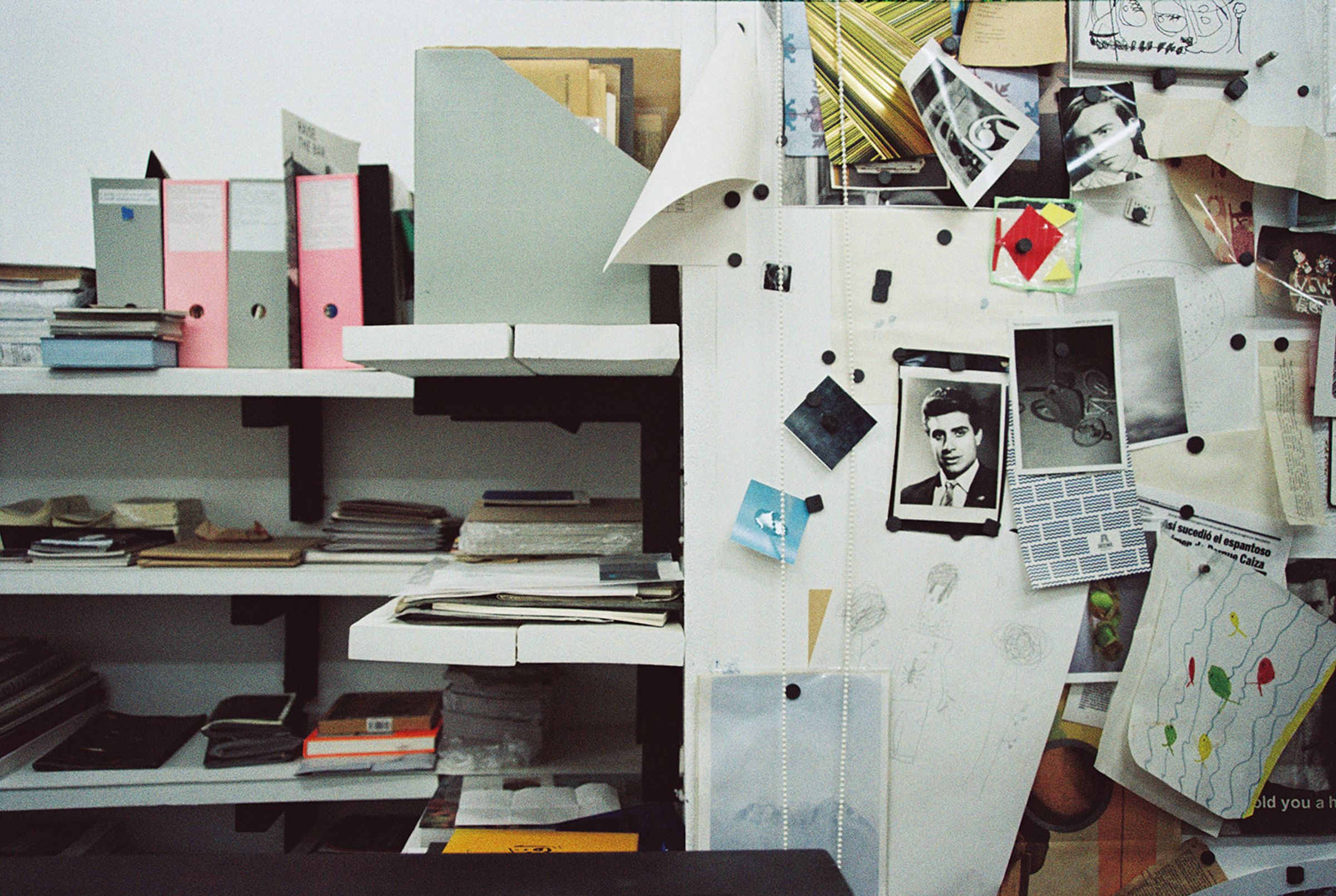
“Sometimes, you know what happens? When you are doing a project, you are in the infatuation phase. You are in the honeymoon: this is going to be incredible, we have to put everything into it. And with the passage of time it becomes colder, more clinical, and you see things that you had not seen.”
Alejandro’s grandfather taught him how to read a city. As they walked through Monterrey, he would point out bridges, houses, and construction projects, explaining how things were built and helping Alejandro understand what he was looking at. But there was another way he came to know the city, one that had less to do with understanding how it worked and more to do with experiencing it for himself.
He started skateboarding when he was eleven. On a skateboard, the city became something to feel, navigate, and play with. A bench was no longer just a place to sit; a curb, a ramp, or a change in pavement could become an opportunity for a trick. As Alejandro put it, “Everything is an opportunity to do a trick. Everything is an opportunity to understand how I can use this space to have fun, to do things.”
During the 1990s, he traveled across Monterrey on his skateboard, from Cumbres to Guadalupe, all the way to San Nicolás, and everywhere in between. He lived in Cumbres, worked at a skateboard shop called Skate or Die, and spent much of his time moving through the city. Skateboarding made him aware of its physical realities in a way that simply walking through it might not have. “I was feeling the streets, the problems of poor mobility, all that, the bad benches, everything.”
Looking back, these two experiences offer different ways of understanding Alejandro’s relationship with the city. His grandfather taught him to look closely at how it was built; skateboarding taught him how it felt to move through it. One gave him a language for its structures, the other an intimate knowledge of its surfaces, obstacles, and possibilities. Together, they help explain why the city in his photographs is never just a backdrop. It is something he has spent years learning to read and experience.
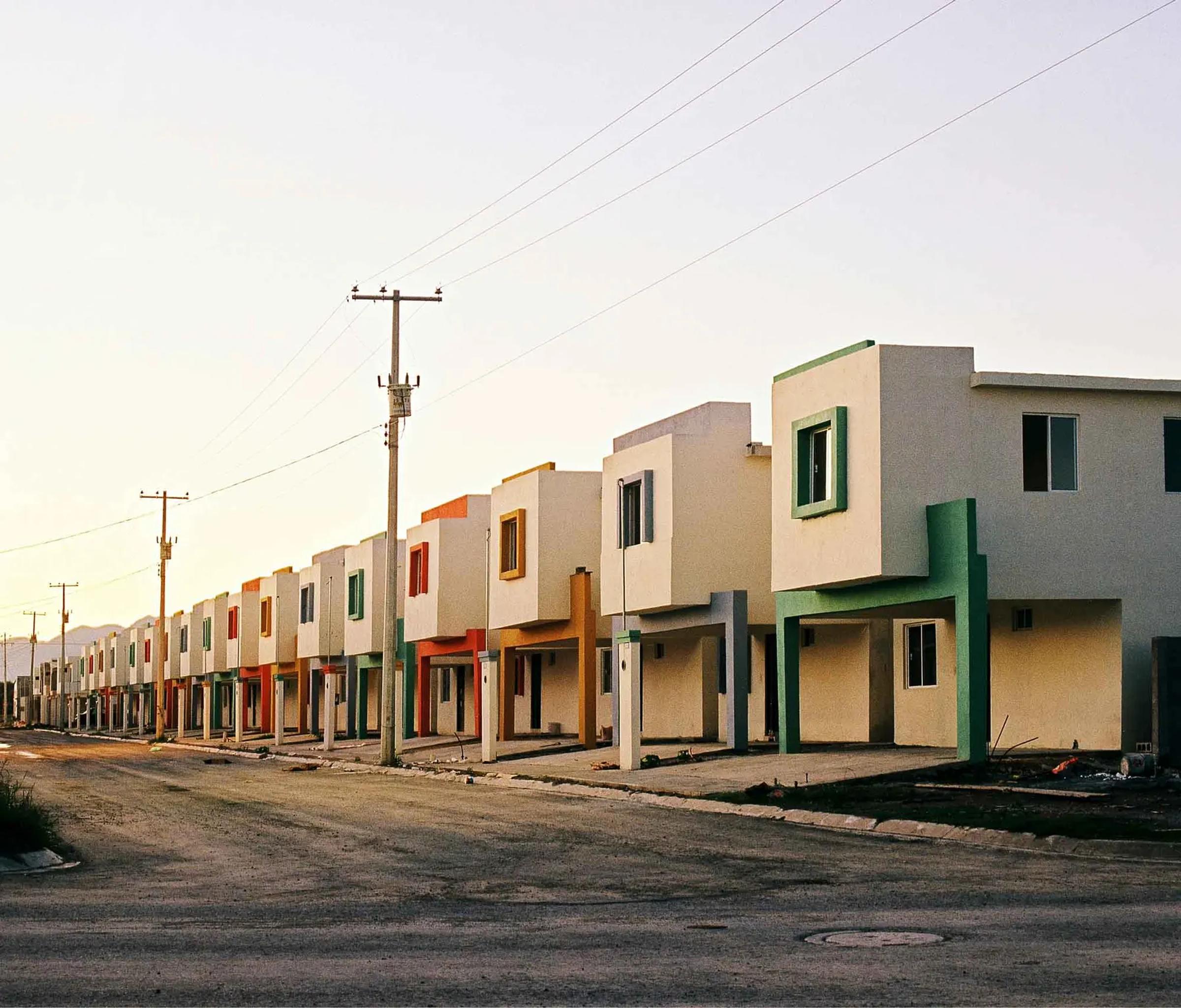
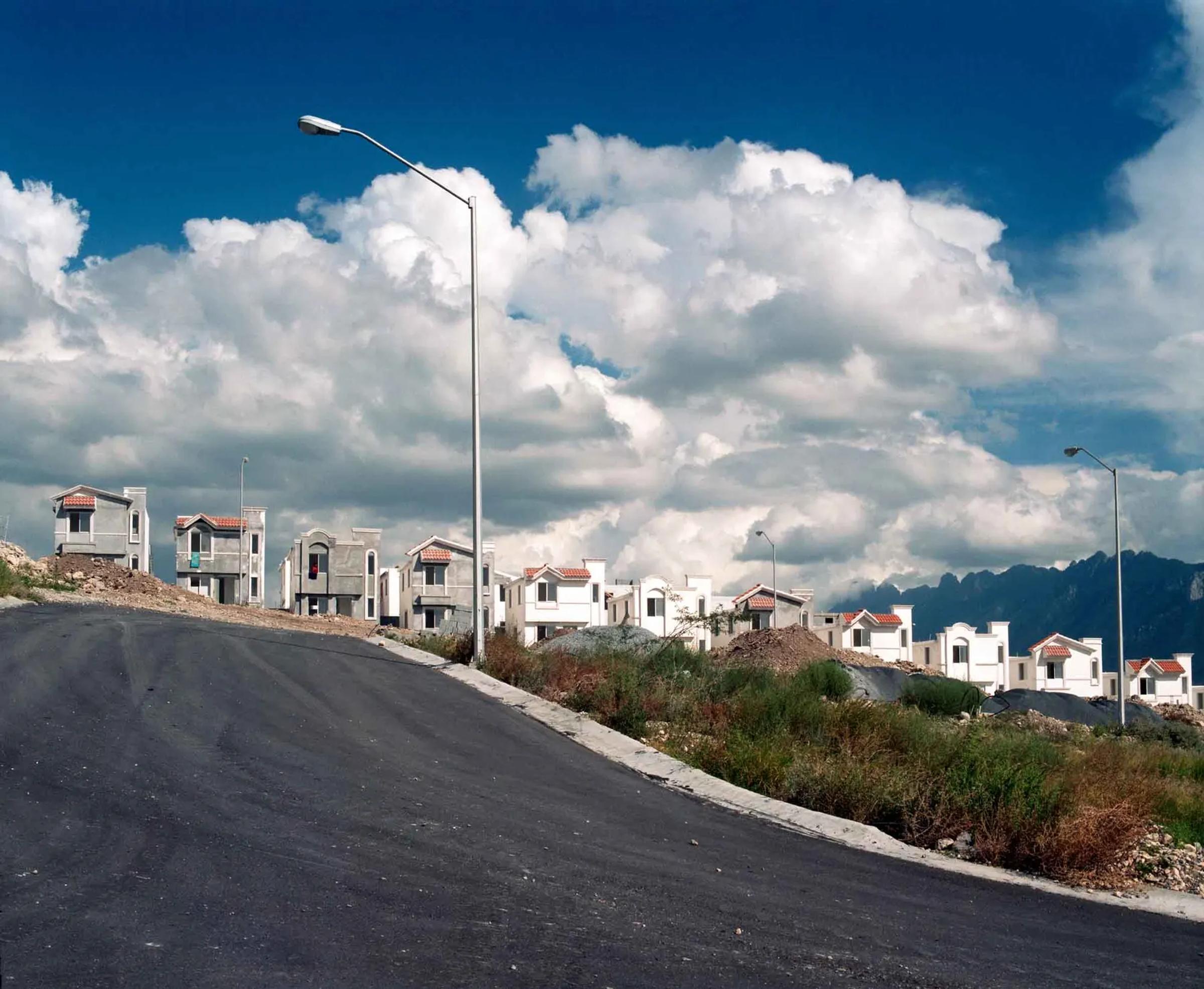
Having spent years moving through the city and watching it grow, he became interested in the forces shaping its expansion. That interest took him beyond Carpoolers and into Suburbia Mexicana, a project he developed while studying for his master’s in visual studies.
At the time, Alejandro was observing suburban growth while reading about how cities expand toward their peripheries, affecting city centres, mobility, security, and ecology. Looking back at his portfolio, he recognized projects corresponding to different stages of this process: immobility, infrastructure, housing, work, and the problems created by urban expansion.
For Cartagena, mortality makes him nostalgic rather than anxious: “I think inevitably we are nostalgic beings. A part of me automatically sees the images or thinks that it generates an image, and it is already past. I feel an immediate nostalgia for having created the image at that moment and for seeing the image after a long time.” Instead of fighting this feeling, he has accepted it as a condition of the medium and, to a certain extent, he enjoys it.
That feeling soon found its way into his first projects. He began recreating moments from the family album and pairing original photographs with new notes about how he felt looking at them in the present. The images allowed him to revisit the past while acknowledging the distance between the person he had been and the person he was becoming.
But nostalgia was not the only thing he found in the album. Among its photographs were people who were no longer alive, confronting him with the fact that time could stop for a person while their image remained. That early encounter with mortality became another recurring question in Cartagena’s work and life.
For years, Alejandro had approached mortality with a certain curiosity. Growing older meant gaining experience, understanding things more clearly, and having more time to learn. But two years ago, that perspective changed. During a trip to Puerto Escondido, Oaxaca, Alejandro and his family nearly drowned. The experience brought him face to face with his own vulnerability in a way he had never felt before. Mortality was no longer simply an idea to explore or understand; it became something he had to consider in relation to the people he loves and the life he still wants to live.
What frightened him was not only the possibility of dying, but the possibility of not being here to do everything he still wants to do. His relationship with mortality became more protective, more careful. The future, once something to approach with curiosity, also became something he wanted to preserve.
“It is a game, because at the end of the day nobody guarantees that this will transcend or that it will matter later. But if there is an ending and there is nothing after that ending, I feel I am going to get there happy because I did everything I wanted to do in my life.”
I asked him whether he would actually want his work to be remembered. Cartagena does not seem particularly concerned with that distinction. “I do not care. Honestly, I do not care. If I manage to reach the end doing everything I have wanted to do and thought I wanted to do, I am served. And time will tell what is remembered and what is not.”
Whether his work will survive him is another question. There are already many books of his images, and his work is held by institutions around the world. As this piece was being written, it entered the permanent collection of MoMA. Still, he assumes it will last for a while and eventually disappear.
He sees museums as ‘living archives’, but even they cannot promise that photographs will last. “Photography itself is still a relatively young medium. The oldest photo is two hundred years old. It is nothing compared with painting, drawing, engraving, sculptures. So it remains to be seen.”
What would remain of his life if every photograph he had ever made disappeared tomorrow? He laughed at the possibility. “It would be incredible. It would be a great story if all my images disappeared.” Because even without the photographs, he would still be the person who made them. He thought about them, spent years producing them, and built his life around them. If everything disappeared tomorrow, he says he would still be in the same place, with the same determination to make more. The idea seemed to surprise him as he said it, almost as if the disappearance of the archive would simply create a new beginning. A fictional group of thieves could steal every photograph he had ever made. “It seems super interesting to me.”
If he could take one last photograph without context or explanation, he had never thought about what it would be. His first instinct was Monterrey. Something about the city. “I hate and love my city, and I think I would make an image of the city. I do not know, it is the first thing that came to mind.”
What would he want his last words to be? He laughed at the weight of the question, then thought about it. “I was happy. I was happy, and I lived everything I wanted to live.”